
Why Single AI Agents Fail: Building Multi-Agent Workflows That Scale in Financial Services
Discover why isolated AI agents create more problems than they solve in financial services. Learn the three orchestration patterns that banks and wealth managers use to coordinate multi-agent systems without creating chaos or compliance risk.
Javier Flaim
7 min read
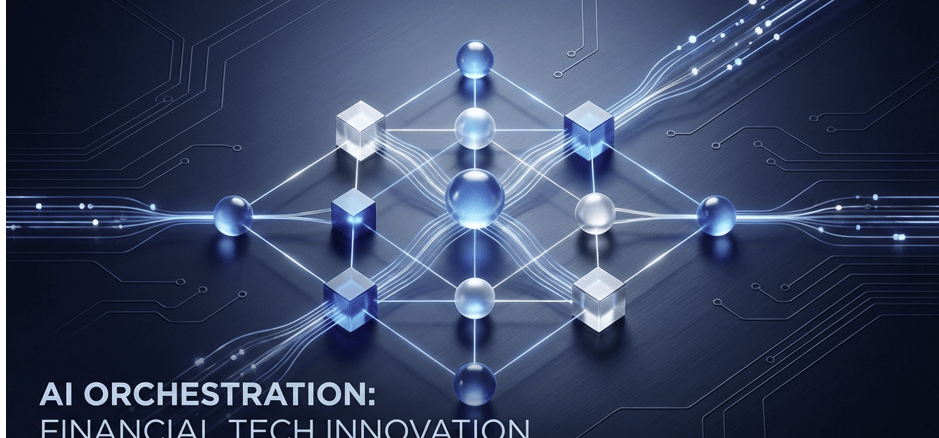
Your bank just deployed its first AI agent. It handles document intake. Cuts processing time by 60%. Leadership is thrilled. So you deploy agent number two for fraud scoring. Then agent three for compliance review.
Six months later, you have eleven agents. Each one works fine in isolation. But they don't talk to each other. Your loan officer gets conflicting recommendations from three different agents. Your compliance team is manually reconciling outputs. You've automated the parts, but the whole is still broken.
Welcome to the orchestration problem. Here's how financial services firms are actually solving it.
The Problem With Isolated AI Agents
Most financial institutions started their AI journey the same way: one use case, one agent, one problem solved. A document processing agent here. A customer inquiry chatbot there. Maybe a fraud detection model running in the background.
This makes sense in the pilot phase. You want to prove value quickly. Minimize risk. Learn what works before scaling. So, you pick a contained workflow, deploy a single agent, measure the results, and declare victory.
But here's what happens when you scale that approach: agent proliferation.
Each department deploys its own agents. Marketing has lead scoring. Sales has outreach automation. Compliance has review protocols. Operations has document handlers. Risk has monitoring systems. None of them were designed to work together because they were never supposed to need to.
The problem surfaces when workflows cross departmental boundaries. A prospect moves from marketing to sales. An application moves from intake to underwriting to compliance. A transaction triggers fraud scoring, compliance review, and customer notification simultaneously. Suddenly, your isolated agents are stepping on each other.
I see this pattern constantly. Agent A pulls customer data and recommends an action. Agent B pulls the same data five minutes later and recommends something different because it's using a slightly different model or working from stale cache. Agent C doesn't know either of them ran and duplicates the work entirely.
You end up with coordination overhead that's worse than the manual process you automated. The agents work, but the system doesn't.
What Multi-Agent Orchestration Actually Means
Orchestration is the layer that sits above individual agents and coordinates their work. Think of it less like managing employees and more like conducting an orchestra. Each musician can play their instrument perfectly. But without a conductor coordinating timing, tempo, and dynamics, you get noise instead of music.
In practice, orchestration handles three critical functions.
First, workflow routing. When a loan application arrives, which agents should process it, in what sequence, and under what conditions? The orchestration layer defines these paths and makes sure agents execute in the right order with the right inputs.
Second, data flow management. Agent A's output becomes Agent B's input. The orchestration layer manages those handoffs, keeps data consistent, and prevents agents from working on stale or conflicting information. It's the system's memory of what's happened and what should happen next.
Third, conflict resolution. When two agents recommend different actions, something needs to decide. Sometimes that's a rules-based hierarchy. Sometimes it's a human checkpoint. Sometimes it's a specialized "decision agent" that weighs the trade-offs. The orchestration layer enforces those decision protocols.
This isn't theoretical. BNY Mellon deployed a system called "Eliza" that coordinates 13 different agents to help sales teams recommend financial products. Each agent has a specialized function: client data retrieval, product matching, compliance checking, pricing calculation, proposal drafting. The orchestration layer makes them work in concert rather than isolation.
The Three Orchestration Patterns Financial Firms Use
After analyzing implementations across banking, wealth management, and lending, I see three distinct orchestration patterns. Each solves different problems and requires different infrastructure.
Pattern One: Sequential Orchestration
This is the simplest pattern. Agent A completes its task, passes the output to Agent B, which completes its task and passes to Agent C. Think assembly line. A loan application moves through document verification, credit scoring, income analysis, compliance review, and approval recommendation in strict sequence.
The advantage is predictability. You know exactly what happens and when. The orchestration logic is straightforward: if Agent A succeeds, trigger Agent B. If Agent A fails, route to exception handling.
The limitation is rigidity. If Agent C discovers an issue that requires Agent A to re-run with different parameters, you're stuck. Sequential patterns work well for stable, well-defined processes but struggle with complexity or iteration.
Pattern Two: Parallel Orchestration
Multiple agents work simultaneously on the same input, and their outputs get aggregated. A fraud transaction might trigger six agents at once: transaction pattern analysis, geolocation verification, merchant risk scoring, customer behavior analysis, regulatory flag checking, and historical comparison. All run in parallel, and the orchestration layer synthesizes their outputs into a single risk score.
The advantage is speed. You're not waiting for sequential completion. The challenge is synchronization. What happens if Agent 4 finishes in 50 milliseconds but Agent 6 takes 8 seconds? Do you wait? Do you proceed with partial information? The orchestration layer needs timeout logic, fallback protocols, and rules for handling incomplete data.
Pattern Three: Adaptive Orchestration
This is the most sophisticated pattern. The orchestration layer dynamically decides which agents to invoke based on context, intermediate results, and real-time conditions. It's not following a fixed script. It's making decisions.
A compliance review might start with a basic screening agent. If it flags potential issues, the orchestrator invokes a specialized regulatory agent. If that agent finds specific violations, the orchestrator routes to a legal review agent and notifies human oversight. If the initial screening is clean, none of that happens. The path is determined by the data, not predetermined.
This pattern delivers the highest value but requires the most sophisticated infrastructure. The orchestration layer itself becomes an intelligent system that needs governance, testing, and monitoring.
When Agents Coordinate vs. When They Collide
Here's what most implementations get wrong: they assume that adding orchestration automatically makes agents work together. It doesn't. Orchestration exposes coordination problems that were hidden when agents operated in isolation.
The classic failure mode is circular dependencies. Agent A needs data from Agent B. Agent B needs confirmation from Agent C. Agent C is waiting for input from Agent A. You've created a deadlock. I've seen production systems where agents literally thanked each other in infinite loops because no one designed the exit condition.
The second failure mode is permission escalation. If Agent A can approve Agent B's access to sensitive data, and Agent B can approve Agent C's actions, you've accidentally created a permission chain that violates your security model. Orchestration can amplify access control mistakes rather than prevent them.
The third failure mode is conflicting objectives. Your marketing agent is optimized for lead volume. Your compliance agent is optimized for risk minimization. When they're orchestrated together, which one wins when they disagree? If you haven't explicitly defined priority hierarchies and conflict resolution rules, the system will make inconsistent decisions.
Successful orchestration requires design decisions at three levels.
First, explicit agent scope. Each agent should have a narrow, well-defined job. The orchestrator shouldn't be trying to coordinate generalists—it should be coordinating specialists.
Second, clear data contracts. Agent outputs must have defined schemas that downstream agents expect. When Agent A passes data to Agent B, both need to agree on what that data means, how it's formatted, and what to do when it's missing or malformed.
Third, governance by default. The orchestration layer should enforce your business rules, compliance requirements, and risk tolerances automatically. It's not just routing work—it's ensuring that work happens within your guardrails.
The Build vs. Buy Decision Framework
Every financial services firm I work with asks the same question: should we build our orchestration layer or buy a platform?
Here's how to think through that decision. Building gives you maximum control and customization. You can architect exactly what you need for your specific workflows. You own the IP. You're not locked into a vendor's roadmap or pricing model.
But building carries hidden costs. Orchestration platforms are complex infrastructure. You need engineers who understand distributed systems, message queuing, state management, and error handling. You need to solve problems that platform vendors have already solved: agent registration, health monitoring, load balancing, retry logic, dead letter queues, audit logging.
I've watched firms underestimate this by an order of magnitude. They think they're building a simple routing layer and discover six months in that they've recreated Apache Kafka with worse performance.
Buying a platform accelerates deployment but introduces dependencies. You're constrained by the platform's agent model, integration capabilities, and pricing structure. If your workflows don't fit the platform's assumptions, you'll spend significant effort working around limitations.
Here's my framework. If your orchestration needs are straightforward—sequential workflows, limited parallelism, low transaction volume—build it. You'll get something operational faster than evaluating vendors.
If you need adaptive orchestration, high transaction volumes, or coordination across dozens of agents, buy a platform. The engineering investment to build that capability exceeds the platform cost.
If you're in between, consider a hybrid approach. Use a lightweight orchestration framework like Apache Airflow for the foundation, but build your domain-specific logic on top. You get proven infrastructure without full vendor lock-in.
The one non-negotiable: whether you build or buy, you need monitoring and observability from day one. You should be able to trace any transaction through the entire agent chain, see where time is spent, identify bottlenecks, and audit decisions. Orchestrated systems are opaque by nature. Instrumentation makes them transparent.
Moving From Pilots to Production
Most financial services firms are somewhere in the middle of this transition. You have agents in production. You're seeing value. But you know the current approach won't scale to 50 agents or 500.
The firms that navigate this successfully treat orchestration as infrastructure, not as a feature. They invest in the coordination layer before they deploy agent number 10, not after they've deployed agent 50 and everything's breaking.
They also recognize that orchestration isn't purely technical. It's organizational. When agents span departments, someone needs to own the end-to-end workflow. When agents make decisions that affect risk, someone needs to define the decision framework. Technology enables orchestration, but governance makes it work.
At Blue Lion, we help financial services firms utilize the efficacy and efficiencies of Agent workflows. We don't sell you tools. We build the systems that enables your teams to be more successful.
If you're managing more than multiple AI agents and starting to feel coordination pain, let's talk. The solution isn't more agents. It's better orchestration.